
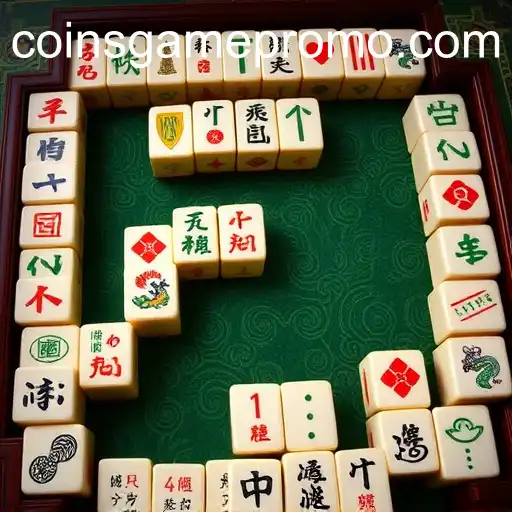
Coins Game | Exploring Mahjong: The Intricacies of the Coins Game
Coins Game’s A deep dive into Mahjong and the strategic role of the Coins Game, exploring its historical significance and cultural impact.
Discovering the Depths of Mahjong: The Coins Game
Introduction to Mahjong
Mahjong, a game steeped in tradition and history, is much more than just a pastime. Originating from China during the Qing dynasty, this ancient game has grown to become a cultural phenomenon across Asia and has even spread its influence worldwide. Known for its strategic complexity and intricate play, Mahjong offers more than a standard board game experience. Within this fascinating world, the concept of the "Coins Game" stands out as a significant aspect, contributing to an array of strategies and styles employed by players.
The Historical Roots of Mahjong
Mahjong's roots can be traced back to approximately the mid-1800s in China. It's believed to have evolved from various traditional Chinese card games, with influences from other forms such as dominoes. The game symbolically incorporates aspects of Chinese culture, reflected in its tile designs often representing familiar elements such as dragons and flowers.
As the game gained popularity, it transitioned from regional variations to a more standardized form, allowing it to cross borders and adapt to international audiences. By the early 20th century, Mahjong had reached the United States and Europe, experiencing peaks and valleys in popularity over the decades.
Understanding Mahjong's Structure
To play Mahjong, participants need a set of 144 tiles, each adorned with Chinese characters and symbols. These tiles are categorized into suits: dots, bamboo, and characters, with additional honor tiles comprising winds and dragons. Central to the game is the combination of these tiles into winning hands, often requiring a blend of strategic foresight and tactical maneuvering.
The aim of Mahjong is to build a legal hand of 14 tiles comprising four sets and a pair. Throughout a round, players draw and discard tiles, using skill and chance to enhance their hand's potential to "go Mahjong"—a condition where all required combinations are complete.
The Coins Game: A Unique Element of Mahjong
Among the various components of Mahjong, the Coins Game refers to a particular strategy involving the dot suit, sometimes called "coin" tiles due to their appearance. This suit, decorated with dot patterns reminiscent of old Chinese currency, plays a crucial role in forming the game's strategic essence. Understanding the Coins Game can greatly influence a player's approach to building hands and anticipating opponents' moves.
The strategic focus of the Coins Game lies in its ability to mislead opponents. Savvy players can use the dot suit to create uncertainty, leading less experienced players astray. A player might prominently display their use of coin tiles, prompting other players to believe that a winning combination relies heavily on them, while the actual strategy may be entirely different.
Strategic Gameplay and Skills
In-depth knowledge of the Coins Game can enhance strategic play. Delving into this facet requires players to develop a keen sense of observation and prediction, honing the ability to track tiles and anticipate opponents' hands. It involves discerning which tiles are likely to be drawn or discarded by others, thus adjusting one's strategy accordingly.
Players often vary between offensive and defensive tactics. When adopting an aggressive style, using the dot suit to complete sets swiftly is a go-to approach. However, when playing defensively, retaining certain coin tiles can serve as a deterrent, denying opponents the necessary pieces to complete their hands.
Cultural Significance of the Coins Game
Mahjong, with its deep cultural roots, extends beyond mere gameplay, intertwining with social events and festivals throughout the year. Known for bridging generational gaps, Mahjong sessions often become family affairs, where skills and strategies like those found in the Coins Game are passed down through storytelling and shared experience.
The skillful manipulation of the Coins Game is sometimes compared to the art of war in Chinese philosophy, where misdirection and adaptive planning are key tenets. Players adept in this technique are revered for their foresight and cunning, often considered a mark of seasoned expertise within Mahjong circles.
The Ever-evolving World of Mahjong
Mahjong's dynamic nature ensures that it continually evolves, with variations emerging globally. From the Japanese Riichi Mahjong to American Mahjong, each iteration of the game reimagines the roles of tiles, including those in the dot suit, redefining how the Coins Game is potentially utilized. As Mahjong's global presence expands, understanding these variations and adapting the Coins Game to different versions allows players to cultivate a well-rounded strategic portfolio.
The rise of digital Mahjong platforms has further popularized the game, allowing for an unprecedented exchange of strategies and cultures. Online communities flourish, with players sharing insights about their favorite strategies, including nuanced discussions about the effective use of the dot suit in various game versions.
The Future of the Coins Game in Mahjong
As Mahjong continues its upward trajectory in the global gaming sphere, its strategic elements, especially the Coins Game, remain integral to its enduring appeal. Enthusiasts and newcomers alike are drawn to the challenging yet rewarding nature of mastering this component, which entails not just knowledge but intuitive play.
Looking ahead, competitive Mahjong tournaments are likely to further dissect and innovate around strategies like the Coins Game, influencing new generations of players to explore these nuances. As technology continues to transform how enthusiasts engage with Mahjong, the essence of traditional gameplay paired with inventive strategies such as the Coins Game will persist as vital contributors to the rich tapestry of Mahjong culture.
